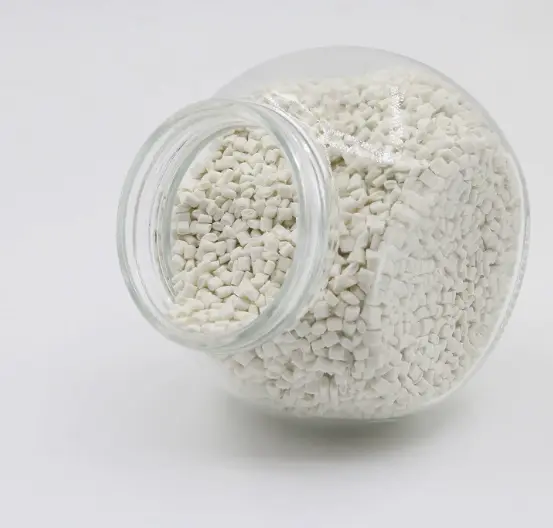
Polypropylene is one of the most widely consumed thermoplastics in the world, appearing in everything from food containers to car bumpers. Produced by polymerizing propylene, it combines low density, good heat and chemical resistance, and low cost. This guide covers its structure, grades, modification and everyday uses.
Polypropylene (PP) is a semi-crystalline thermoplastic produced by polymerizing propylene monomer. It is among the five largest commodity plastics and one of the most consumed thermoplastics globally, valued for its balanced performance, light weight and cost efficiency.
The material’s versatility comes from its structure. Crystallinity provides stiffness and heat resistance, while the polymer backbone resists water, most acids and bases, and a wide range of solvents — a combination that is rare among low-cost plastics.
PP is sold in three main families. Homopolymer (PPH) offers the highest rigidity and strength, making it the default for rigid containers and industrial parts. Random copolymer (PPR) introduces transparency and better low-temperature performance, suited to film and household ware.
Block or impact copolymer (PPC) adds ethylene to create impact resistance, especially at low temperature, for automotive bumpers, pallets and battery cases. Choosing the right grade starts with understanding which of these property sets the application requires.
PP has a density of about 0.90 g/cm³, lighter than water, so PP products float. Its melting point sits around 160–170 °C, giving good resistance to hot-fill and dishwasher temperatures. Electrical insulation is excellent, and moisture absorption is very low, keeping dimensions stable in humid environments.
The material is also among the cheapest thermoplastics on a per-unit-volume basis, which is decisive in mass-market applications. Its low surface energy makes printing and bonding harder, but surface treatment routinely solves this.
Compounding turns PP into an engineering-grade material. Glass-fiber reinforcement at 20–40% loading (GF20/GF30/GF40) sharply raises strength, stiffness and heat distortion temperature. Mineral fillers reduce cost and warping, while antistatic and flame-retardant additives tailor the resin to electronics and appliance use.
Impact modifiers and elastomer blends restore toughness where fiber loading makes parts brittle. The result is a family of PP compounds that compete with more expensive engineering plastics in automotive and appliance applications.
PP appears in food packaging and containers, microwave ware, car parts such as bumpers, dashboards and door panels, and home-appliance housings. Woven bags and raffia made from PP fiber carry a large share of agricultural and logistics packaging.
The resin is also a raw material for nonwovens, including meltblown fabrics, and is processed by injection molding, extrusion, blow molding and cast or blown film. Few plastics cover this range of processes and markets at comparable cost.
Buyers comparing PP with polyethylene should focus on temperature and stiffness. PP withstands higher service temperatures and holds its shape better, while PE offers greater flexibility and toughness at low temperature. For hot-fill packaging, dishwasher-safe ware and structural parts, PP is usually the answer.
As with any commodity resin, grade selection and supplier qualification matter more than the polymer name. A well-chosen PP grade, properly dried and processed, delivers reliable performance across a broad range of everyday products.
For buyers, the practical consequence of PP’s versatility is that grade selection is everything. A food-contact container and a car bumper demand different copolymers, flow rates and additive packages, and qualifying grades against the specific application avoids both overpaying for performance and under-specifying for the job.
Sustainability is reshaping PP in quieter ways than some polymers. Mechanical recycling of PP is well established, and recycled grades are entering packaging and non-food applications. Lightweighting — using PP’s low density to replace heavier materials — remains one of its strongest environmental arguments across automotive and logistics.
One practical note on supply: PP is so widely produced that it is rarely a scarcity concern, but quality consistency still varies by producer and grade. Verifying melt flow, additive package and lot-to-lot stability through a qualified supplier is the difference between a smooth run and a production headache, especially for thin-wall, film and fiber applications where small property shifts change the process window.
Market outlook: Market outlook: PP’s broad application base keeps it among the most resilient commodity plastics. Growth will track packaging, automotive and appliance demand, while recycled-content requirements add a new qualification layer for suppliers. Cost, processability and light weight ensure it stays a default choice.