Polylactic acid (PLA) has become the most commercially successful biodegradable plastic, replacing petroleum-based resins across packaging, food service and 3D printing. Produced by fermenting corn starch rather than cracking crude oil, it combines transparency and industrial compostability with the processability of a conventional thermoplastic. This guide explains its raw materials, synthesis, properties, leading producers and expanding applications.
PLA, also known as polylactide, is an aliphatic polyester produced by polymerizing lactic acid. It belongs to the family of bioplastics — materials that are bio-based, biodegradable, or both. As the most widely produced biodegradable plastic, it is frequently cited as the benchmark of the emerging bio-based plastics industry.
What sets PLA apart is its entire value chain. Where PP, PE and PS begin with naphtha or natural gas, PLA begins with biomass. That fundamental difference explains both its environmental appeal and the operational care it demands — the polymer is sensitive to hydrolysis and must be dried before processing.
The feedstock for PLA is renewable biomass, with corn starch the dominant raw material. Sugarcane, cassava and sugar beet are also used in different regions. The starch is hydrolyzed into dextrose, which is then fermented by microorganisms into lactic acid — the monomer from which the polymer is built.
Because the carbon in PLA originates from plants grown in the current season rather than from fossil reserves, the material carries a fundamentally different environmental footprint from conventional resins. This renewable origin is central to its appeal in markets where sustainability credentials are a purchasing requirement.
Commercial PLA production follows a two-step route. Lactic acid is first condensed into lactide, a cyclic dimer. The purified lactide then undergoes ring-opening polymerization to yield high-molecular-weight PLA. By adjusting the ratio of L- and D-lactide isomers, manufacturers control crystallinity, melting point and degradation rate to match different applications.
PLA is transparent and glossy, with good rigidity that brings it close to commodity thermoplastics such as GPPS. Its most distinctive advantage is complete biodegradability under industrial composting conditions, where elevated temperature and humidity allow microbes to break the polymer down within a defined cycle.
The material also has well-documented limits. It is brittle, has a low heat distortion temperature, and its limited melt strength complicates blow molding and foaming. These drawbacks are normally addressed through compounding rather than by changing the resin itself.
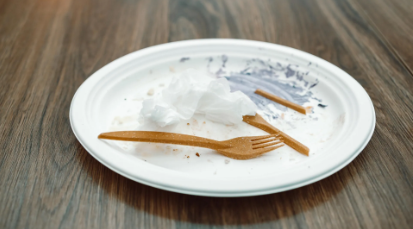
PLA already serves several mature end-markets. Food packaging and disposable tableware account for a large share, driven by bans on single-use plastic foam. In 3D printing, PLA filament is the default entry-level material because it prints cleanly with low warping and a mild odor.
Beyond packaging, PLA is used in nonwovens and fibers, in agricultural mulch film that degrades after the growing season, and in medical consumables such as absorbable sutures and drug-delivery systems, where biocompatibility is the deciding factor.
The policy environment is the strongest growth driver. China’s plastic-ban framework and the European Union’s Single-Use Plastics Directive continue to push demand toward bio-based, biodegradable materials. As the most mature and scalable bio-based polymer, PLA sits at the center of this transition.
Supply is concentrated among a small group of established players. NatureWorks, an American producer, markets PLA under the Ingeo brand, while TotalEnergies Corbion supplies the Luminy range. In China, COFCO, Jindan Technology and Wanhua Chemical have invested in production capacity, expanding global supply of polymer-grade lactic acid.
For buyers, the practical message is to plan around PLA’s processing sensitivity and thermal limits: drying before molding is mandatory, and grade selection should follow the intended application. As capacity grows and prices fall, PLA is expected to move further beyond packaging into structural and industrial uses.
Processors should approach PLA as a specialty rather than a drop-in commodity. The resin must be dried to a low moisture content before any melt processing, because the polymer hydrolyzes readily and wet material degrades into lower-performance parts. Molding temperatures sit in a fairly narrow window, and shops experienced with other hygroscopic resins adapt quickly once drying discipline is in place.
Cost remains the gatekeeper for wider adoption. PLA still carries a premium over most commodity resins, although the gap has narrowed as production scale grows. That premium is acceptable where regulation or brand sustainability goals value a compostable, plant-based alternative — and where it is not, blended and reinforced grades help justify the switch.
Market outlook: Market outlook: the trajectory points firmly upward, supported by policy, capacity and cost. PLA is expected to remain the workhorse of the bio-based plastics industry, moving steadily beyond packaging into fibers, agriculture and durable goods as heat resistance and toughness continue to improve.